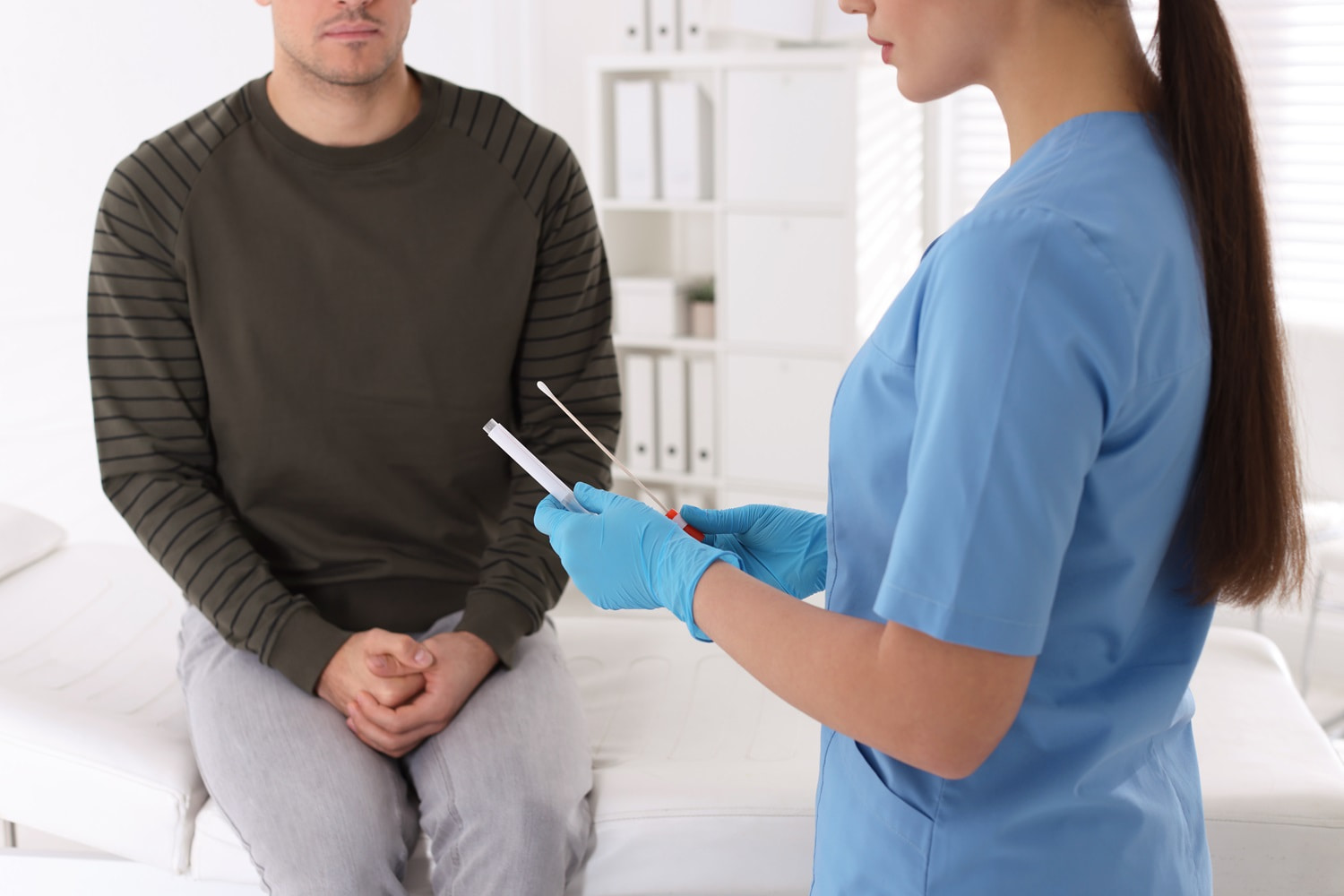
If you have recently had a one-night stand, you may be wondering whether you need STI testing — and if so, when. STI testing after a one-night stand is one of the most common reasons people seek sexual health screening, and it is a sensible step regardless of whether symptoms are present.
Not every sexual encounter results in infection, and the level of risk depends on several factors including the type of contact, whether protection was used, and the infection status of the other person. However, because many STIs can be transmitted through a single exposure and often present without symptoms, testing provides the most reliable way to know your status.
The timing of your test matters. Each infection has a window period — the time between exposure and the point at which a test can reliably detect it. Testing too early may not produce accurate results. This guide explains when to test, what to test for, and what to expect throughout the process.
Do You Always Need an STI Test After a One-Night Stand?
Whether STI testing is necessary after a one-night stand depends on the specific circumstances. There is no single rule that applies to everyone, but the following factors are relevant when assessing your situation:
- Type of sexual contact — vaginal, anal, and oral sex carry different levels of risk for different infections. Penetrative sex without a condom carries a higher potential for transmission
- Condom use — condoms significantly reduce the risk of most STIs when used correctly, though they do not eliminate all risk
- Your partner's infection status — if your partner's status is unknown, which is common after casual encounters, there is an element of uncertainty
- Presence of symptoms — if you have developed any symptoms since the encounter, testing is particularly advisable
It is worth noting that even a single sexual exposure can result in the transmission of infections such as chlamydia, gonorrhoea, syphilis, or HIV. The risk from a single encounter may be lower than from repeated exposure, but it is not zero.
If you are unsure whether testing is appropriate, seeking advice from a healthcare professional can help you decide.
When Should You Get Tested After Casual or Unprotected Sex?
Timing is one of the most important factors in STI testing. Each infection has a window period — the minimum time after exposure before a test can reliably detect it. Testing before the window period has elapsed may result in a false-negative result.
The following table provides general guidance on when to test after a potential exposure:
| Infection | When to Test | Notes |
|---|---|---|
| Chlamydia | 7–14 days | NAAT testing |
| Gonorrhoea | 7–14 days | Urine or swab |
| HIV (4th generation) | 18–45 days | Blood test |
| HIV PCR | 10–14 days | Early detection |
| Syphilis | 3–6 weeks | Blood test |
| Herpes | If symptoms appear | Swab preferred |
Testing too early may result in false-negative results. Repeat testing may be advised depending on exposure timing. If you tested shortly after the encounter and received a negative result, your clinician may recommend a follow-up test once the appropriate window period has fully elapsed.
For more detail on when signs may develop, see our guide on when STI symptoms appear.
What Infections Should You Test For After One-Time Sex?
The infections worth testing for depend on the type of contact that took place. Below is a summary of the most commonly tested infections following a casual sexual encounter.
Chlamydia and Gonorrhoea
These are among the most common bacterial STIs in the UK. Both can be transmitted through vaginal, anal, or oral sex, and both are frequently asymptomatic — meaning you may have no signs at all. Chlamydia, in particular, produces no symptoms in up to 70% of women and 50% of men. Testing is straightforward and usually involves a urine sample or swab.
HIV
The risk of HIV transmission from a single sexual encounter depends on the type of contact and other factors. Receptive anal sex carries a higher per-act risk than vaginal or oral sex. A 4th generation HIV test can detect infection from around 18 to 45 days after exposure. For earlier detection, an HIV PCR test can be used from approximately 10 to 14 days after exposure, though this test is typically more expensive.
Syphilis
Syphilis can be transmitted through vaginal, anal, or oral sex. Early-stage syphilis may present with a painless sore (chancre) that can go unnoticed. Blood testing for syphilis is usually reliable from around three to six weeks after exposure.
Herpes
Herpes testing is generally recommended only if symptoms are present — such as blisters, sores, or tingling in the genital area. A swab of an active lesion is the preferred testing method. Routine blood testing for herpes in the absence of symptoms is not widely recommended due to limitations in test interpretation.
What If You Used a Condom?
Using a condom during sex significantly reduces the risk of STI transmission. Condoms are highly effective at preventing infections that spread through bodily fluids, including chlamydia, gonorrhoea, and HIV.
However, condoms do not provide complete protection against all STIs. Some infections — including herpes, HPV, and syphilis — can be transmitted through skin-to-skin contact in areas not covered by a condom.
If a condom was used correctly throughout the encounter, the overall risk is substantially reduced. However, if you remain concerned, testing can still provide reassurance.
For more on condom effectiveness, see our guide on whether you can get STDs while using a condom.
What If You Have No Symptoms?
It is common to assume that the absence of symptoms means there is nothing to worry about. However, many sexually transmitted infections are asymptomatic — they cause no noticeable signs, particularly in the early stages.
Chlamydia, gonorrhoea, HIV, syphilis, and hepatitis B can all be present without symptoms. This is one of the reasons that testing — rather than symptom-watching — is the most reliable approach to knowing your status.
If you have had a one-night stand and feel well, testing may still be appropriate depending on the type of contact and whether protection was used. A negative test following an appropriate window period provides significantly more reassurance than the absence of symptoms alone.
For more information, see our article on asymptomatic STDs.
Should You Avoid Sex While Waiting to Test?
If you are planning to wait for the appropriate testing window before being screened, you may wonder whether to avoid sex in the meantime.
There is no absolute rule, but the following points may help guide your decision:
- If you have symptoms, it may be sensible to abstain or use condoms until you have been assessed
- If the encounter was recent and you are within the window period for key infections, using protection with any new partners is a reasonable precaution
- If your concern relates to a specific infection such as HIV, you may wish to seek advice about post-exposure prophylaxis (PEP), which must be started within 72 hours of exposure
Avoiding panic-driven decisions is important. Testing at the right time provides much more useful information than testing too early out of anxiety.
Managing Anxiety After a One-Night Stand
Feeling anxious after a casual sexual encounter is common and entirely understandable. It is important to recognise that anxiety itself is not an indicator of infection — and that many people experience regret, worry, or health concerns after casual sex regardless of whether any actual risk was involved.
A few practical suggestions:
- Avoid excessive online symptom searching — health forums and search engine results can amplify anxiety and lead to misinterpretation of normal bodily sensations
- Follow a structured testing timeline — knowing when to test and what to test for provides a clear plan and reduces uncertainty
- Seek professional advice — a healthcare professional can assess your individual situation and provide personalised guidance
- Remember that testing is routine — millions of people are tested for STIs every year. It is a normal, responsible part of sexual health care
If anxiety is significantly affecting your daily life, speaking to a GP or counsellor may be helpful.
NHS vs Private STI Testing After Casual Sex
Both NHS and private services offer reliable STI testing in the UK. The choice between them depends on your preferences and circumstances.
NHS sexual health clinics:
- Provide free STI testing
- Available through GUM clinics, community sexual health centres, and some GP surgeries
- Appointment availability may vary depending on demand and location
- Some areas offer free postal testing kits for chlamydia and HIV
Private STI clinics:
- Charge a fee for testing
- May offer flexible appointment times, including evenings and weekends
- Some provide shorter turnaround times for results
- May offer a wider choice of individual tests or screening packages
- Can provide a discreet alternative for those who prefer not to use local NHS services
Neither option is inherently superior. NHS services provide excellent, free testing for the most common STIs. Private services offer an alternative pathway for those who value convenience, speed, or discretion. Both follow rigorous quality standards for laboratory analysis.
Frequently Asked Questions
Should I get tested after one unprotected encounter?
Testing after a single unprotected encounter is generally advisable, particularly if your partner's STI status is unknown. Even one-time unprotected sex can result in transmission of common infections such as chlamydia or gonorrhoea. Testing provides the most reliable way to confirm your status.
How soon after a one-night stand should I test?
The timing depends on the infection. Chlamydia and gonorrhoea can usually be detected from 7 to 14 days after exposure. HIV testing is most reliable from 18 to 45 days (4th generation test) or 10 to 14 days (PCR test). Syphilis testing is typically reliable from 3 to 6 weeks. Testing too early may produce unreliable results.
Can you get an STI from one time?
Yes. Many STIs can be transmitted through a single sexual encounter. The risk varies depending on the type of contact, the infection involved, and whether protection was used — but a single exposure is sufficient for transmission in many cases.
What if I feel fine after a one-night stand?
Feeling well does not exclude the possibility of infection. Many STIs — including chlamydia, gonorrhoea, and HIV — can be present without causing any symptoms. Testing is the only reliable way to confirm your status, regardless of how you feel.
Do I need to tell my partner I'm getting tested?
There is no legal obligation to inform a casual partner that you are seeking testing. However, if you receive a positive result, informing recent partners allows them to seek testing and treatment. Many clinics offer partner notification services to assist with this process confidentially.
When Should You Seek Urgent Medical Advice?
In most cases, STI testing after a one-night stand is a straightforward process that can be managed through a routine appointment. However, seek prompt medical advice if you experience:
- Severe pelvic pain — which could indicate pelvic inflammatory disease
- Rash accompanied by fever — which may suggest a systemic infection
- Painful genital ulcers — particularly if they are worsening or spreading
- Flu-like illness shortly after a known exposure — which could indicate acute HIV seroconversion or another acute infection
These symptoms do not necessarily indicate a serious condition, but they warrant timely clinical assessment.
Confidential STI Testing in the UK
If you would like confidential STI testing following a recent encounter, appointments are available at our UK clinic. Testing options depend on timing and exposure type, and our team can advise on appropriate screening.
Whether you need guidance on when to test, which infections to check for, or what your results mean, clinical support is available throughout the process. Book a confidential appointment at a time that suits you.
Disclaimer: This article is for general informational purposes only and does not constitute medical advice, diagnosis, or treatment. Sexual health concerns should always be assessed in the context of individual circumstances, and if you are experiencing symptoms that are persistent, severe, or worsening, we recommend consulting an appropriate healthcare service. Please note that our clinic provides private STI testing services only.
Get Tested Today
Take control of your sexual health with our confidential, comprehensive STI testing services.
Share this article:


