Is Penile Discharge Colour Important?
The colour of penile discharge can sometimes provide useful information, but it does not confirm a diagnosis on its own. Discharge colour may reflect the type of organism involved or the body's immune response, but many conditions share similar presentations. Associated symptoms — such as pain during urination, odour, or changes in consistency — often matter more than colour alone. In most cases, testing is the most reliable way to determine the underlying cause of unusual discharge and to guide any appropriate next steps.
What Does White Penile Discharge Mean?
White or cloudy discharge from the penis can have a range of possible causes. It does not automatically suggest a sexually transmitted infection, though some STIs may present this way. Below are some of the more commonly associated causes.
Non-Specific Urethritis
Non-specific urethritis refers to inflammation of the urethra that is not caused by gonorrhoea. It may produce a white or cloudy discharge that can be either watery or slightly thicker in consistency. Burning or discomfort during urination may also be present.
Chlamydia
A chlamydia infection is one of the more common sexually transmitted infections in the UK. In men, it may sometimes produce a mild white or cloudy discharge, though many individuals with chlamydia experience no symptoms at all. When discharge is present, it tends to be relatively thin and may be intermittent.
Fungal Irritation
Candidal balanitis — a fungal condition — can sometimes cause a white, thick, or cottage cheese-like discharge from the penis. This is more common in uncircumcised men and may also involve redness, itching, and irritation of the glans.
Prostatitis
Inflammation of the prostate gland can occasionally result in a white or cloudy discharge. This may be accompanied by pelvic discomfort, difficulty urinating, or pain in the lower back. Prostatitis may be caused by bacterial infection or may be non-bacterial in origin.
Smegma
Smegma is a natural substance made up of dead skin cells, oils, and moisture that can accumulate under the foreskin. It may appear white or off-white and is not a sign of infection. Smegma is distinct from urethral discharge — it forms on the surface of the glans rather than from within the urethra. Regular hygiene typically prevents build-up.
Mild Inflammation
Minor irritation of the urethra from soaps, detergents, or friction can occasionally produce a small amount of white or cloudy discharge. This tends to resolve once the irritant is removed and is not usually associated with infection.
Texture, Odour, and Associated Symptoms
White discharge may be watery or thick depending on the underlying cause. In some cases, a mild odour may be present. Symptoms such as burning during urination, itching, or redness may provide additional context. The presence or absence of these features can help guide whether testing is a reasonable next step.
What Does Yellow or Green Discharge Mean?
Yellow or green penile discharge is often considered more clinically significant and may indicate a bacterial process. While this type of discharge does not guarantee the presence of an STI, it is more commonly associated with certain infections.
Gonorrhoea
A gonorrhoea infection is one of the most commonly cited causes of yellow or green penile discharge. The discharge is often thick, may appear pus-like, and tends to be more noticeable than discharge from other infections. Burning during urination is a common accompanying symptom. However, some individuals with gonorrhoea may experience only mild symptoms or none at all.
Bacterial Urethritis
Bacterial infections of the urethra — whether from STIs or other bacterial causes — may produce yellow-tinged discharge. The consistency is often thicker than discharge associated with viral or non-bacterial causes. Pain or a stinging sensation during urination may also be present.
Trichomoniasis
Trichomoniasis is a parasitic infection that is less common in men than in women, but it can still occur. When symptoms are present, men may notice a thin, yellowish discharge along with irritation of the urethra. Many men with trichomoniasis remain asymptomatic.
Common Features of Yellow or Green Discharge
Yellow or green discharge tends to be thicker in consistency and may have a stronger or more noticeable odour compared with white or clear discharge. It may be accompanied by burning urination, urethral irritation, or staining on underwear. These features may be associated with a bacterial or parasitic cause, though testing is needed to confirm.
Can You Have Coloured Discharge Without an STD?
Yes. Not all penile discharge is related to sexually transmitted infections. Several non-STI conditions may cause white, yellow, or cloudy discharge from the penis.
Urinary Tract Infections
UTIs can occasionally cause discharge alongside symptoms such as frequent urination, burning, or lower abdominal discomfort. While less common in men than in women, UTIs can produce cloudy or discoloured urethral fluid.
Balanitis
Balanitis — inflammation of the head of the penis — may result from poor hygiene, irritants, or fungal overgrowth. It can produce a white or yellowish discharge along with redness, soreness, and swelling of the glans.
Irritation and Allergic Reactions
Contact with certain soaps, shower gels, lubricants, or latex may cause localised irritation that results in a mild discharge. This is typically short-lived and resolves when the irritant is avoided.
Inflammatory Conditions
Chronic inflammatory conditions affecting the urinary tract or reproductive system can occasionally produce discharge. These may include reactive urethritis or inflammatory prostatitis, neither of which is necessarily sexually transmitted.
Dehydration Effects
When fluid intake is low, urine can become more concentrated and may sometimes be confused with discharge. While dehydration does not directly cause discharge, it can alter the appearance of normal urethral fluid, making it appear cloudier than usual.
It is worth noting that while non-STI causes are possible, the only reliable way to distinguish between STI and non-STI causes is through testing.
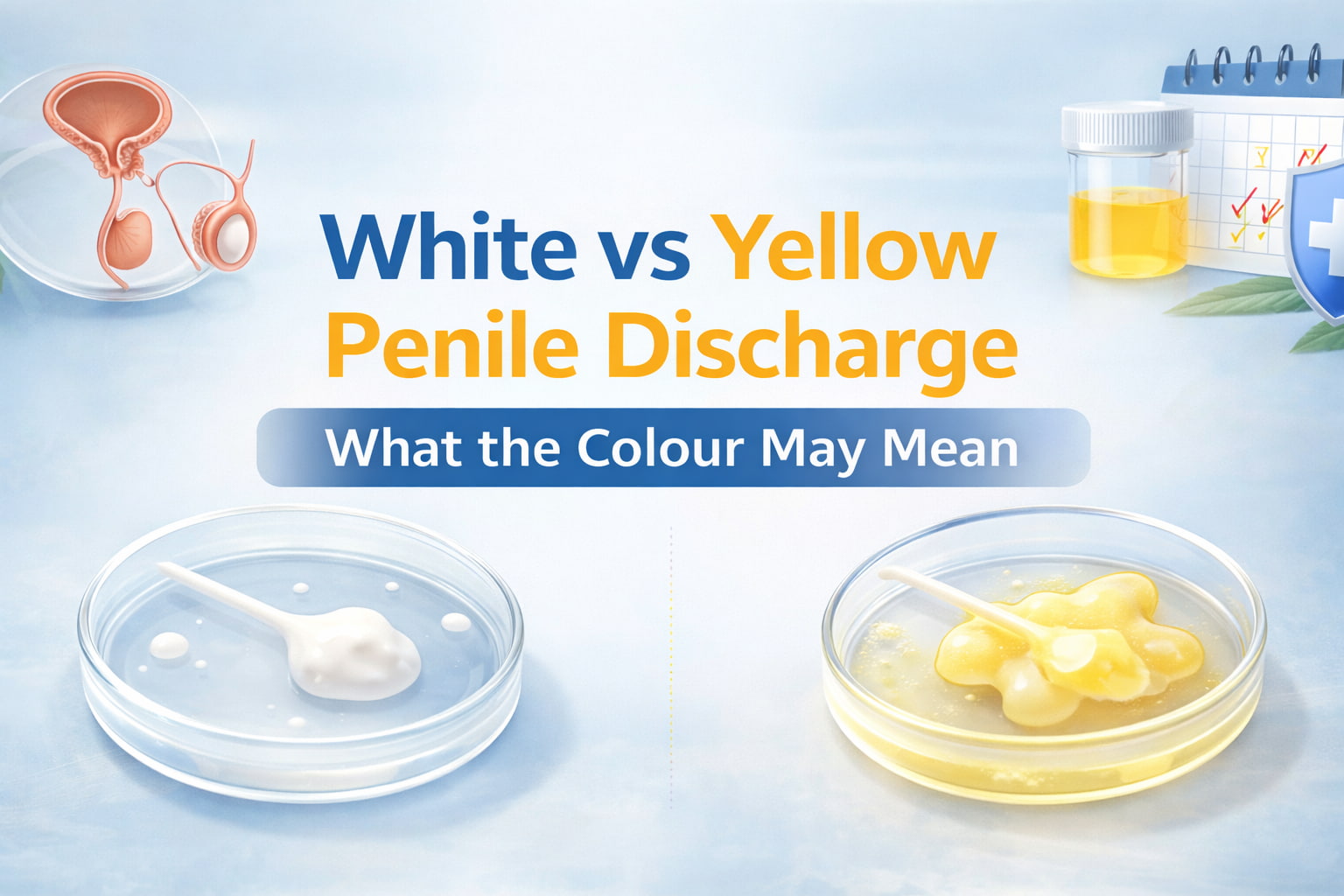
White vs Yellow Discharge – Key Differences
Understanding the general differences between white and yellow or green discharge can help provide context, though overlap exists and no characteristic is entirely diagnostic on its own.
White Discharge
- Often appears cloudy or milky
- May be watery or slightly thick
- Can be associated with mild infection, non-specific urethritis, or fungal irritation
- May sometimes be non-STI related
- Odour is often mild or absent
Yellow or Green Discharge
- Often appears thicker or pus-like
- More commonly associated with bacterial infections
- More likely to be STI-related, particularly gonorrhoea
- May have a stronger or more noticeable odour
- Frequently accompanied by burning urination
These distinctions are general patterns rather than firm rules. Some STIs can produce white discharge, and some non-STI conditions can produce yellow discharge. Testing remains the most reliable method for identifying the cause.
Other Symptoms That Matter More Than Colour
While discharge colour can provide useful clues, other symptoms often carry more diagnostic weight. A combination of symptoms may be more informative than any single feature.
Painful Urination
A burning or stinging sensation during urination is one of the most commonly reported symptoms alongside abnormal discharge. It may suggest urethral infection regardless of discharge colour.
Foul or Unusual Smell
A strong, unpleasant, or fishy odour may indicate a bacterial process. Odour can sometimes be present even when discharge itself is minimal or difficult to notice.
Pelvic or Lower Abdominal Pain
Discomfort in the pelvic region, groin, or lower abdomen may suggest that an infection has spread beyond the urethra. This symptom warrants prompt attention.
Fever
A raised temperature alongside discharge may indicate a more systemic infection. While uncommon with localised urethral infections, fever can occur with epididymitis, prostatitis, or more advanced infections.
Swelling or Redness
Swelling of the glans, foreskin, or surrounding area — particularly when combined with discharge — may point toward balanitis, an allergic reaction, or an active infection.
The combination of symptoms present is often more meaningful than discharge colour alone, and testing can help clarify the clinical picture.
When Should You Consider STI Testing?
Testing is a straightforward and confidential process. It may be appropriate to consider STI testing if any of the following apply:
- Persistent discharge that does not resolve within a few days
- A recent new sexual partner
- Unprotected vaginal, anal, or oral sexual contact
- Symptoms that are worsening over time
- Recurrent episodes of discharge
- A sexual partner has received a positive STI result
- You have concerns about a possible exposure, even without symptoms
There is no requirement to wait for symptoms to worsen before seeking testing. Many STIs can be present without causing noticeable symptoms, and early identification through testing supports timely management. Confidential STI testing in London provides a private and accessible route to clarity.
For further context on normal versus abnormal penile discharge, you may find it helpful to read our related guide: Is Male Discharge Normal? Clear Penile Discharge, Causes & When to Test.
Frequently Asked Questions
Is white discharge always an STD?
No. White penile discharge is not always caused by a sexually transmitted infection. It may result from non-specific urethritis, fungal irritation, prostatitis, or minor inflammation. Smegma, which forms under the foreskin, can also be mistaken for discharge. Testing is the most reliable way to determine whether an STI is the underlying cause.
Does yellow discharge always mean gonorrhoea?
Not necessarily. While gonorrhoea is one of the more commonly associated causes of yellow or green discharge, other bacterial infections and conditions such as bacterial urethritis or trichomoniasis may produce similar symptoms. Testing is needed to confirm the specific cause.
Can penile discharge clear up on its own?
In some cases, mild discharge caused by irritation or a minor inflammatory response may resolve without intervention. However, discharge caused by an STI or bacterial infection is unlikely to clear on its own and may worsen or lead to complications if not identified through testing.
What colour discharge is most concerning?
Yellow, green, or grey discharge — particularly when thick, pus-like, or accompanied by a strong odour and burning urination — tends to be more clinically significant. However, any persistent or unusual discharge that differs from your normal experience may warrant testing, regardless of colour.
How long after exposure does discharge appear?
The timing varies depending on the infection. Gonorrhoea symptoms, including discharge, may appear within two to five days of exposure. Chlamydia may take one to three weeks, and non-specific urethritis can develop over a similar timeframe. Some infections may remain asymptomatic for much longer, which is why testing based on potential exposure rather than symptoms alone is often advisable.
Disclaimer: This article is for general informational purposes only and does not constitute medical advice, diagnosis, or treatment. Sexual health concerns should always be assessed in the context of individual circumstances, and if you are experiencing symptoms that are persistent, severe, or worsening, we recommend consulting an appropriate healthcare service. Please note that our clinic provides private STI testing services only.
Get Tested Today
Take control of your sexual health with our confidential, comprehensive STI testing services.
Share this article: